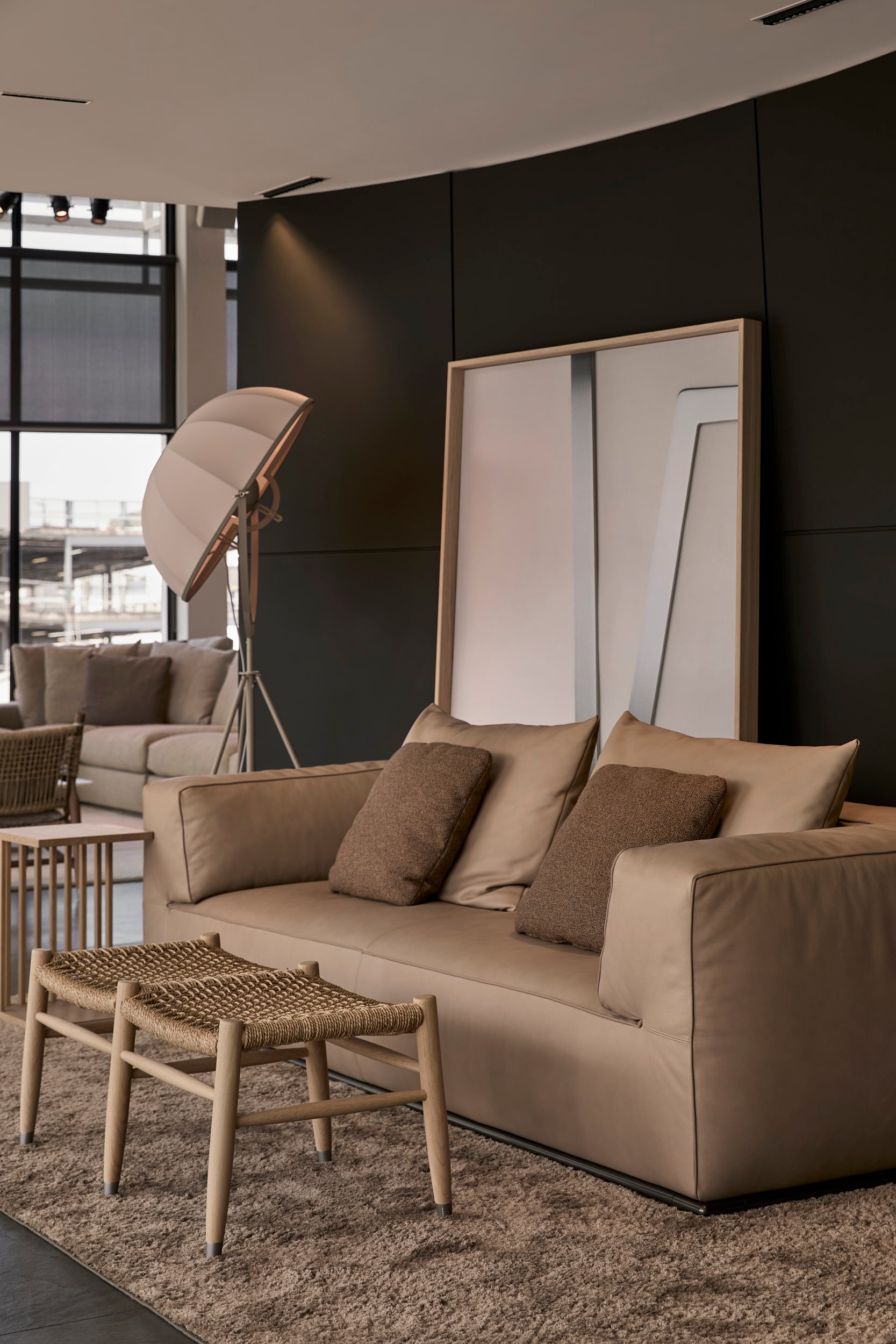
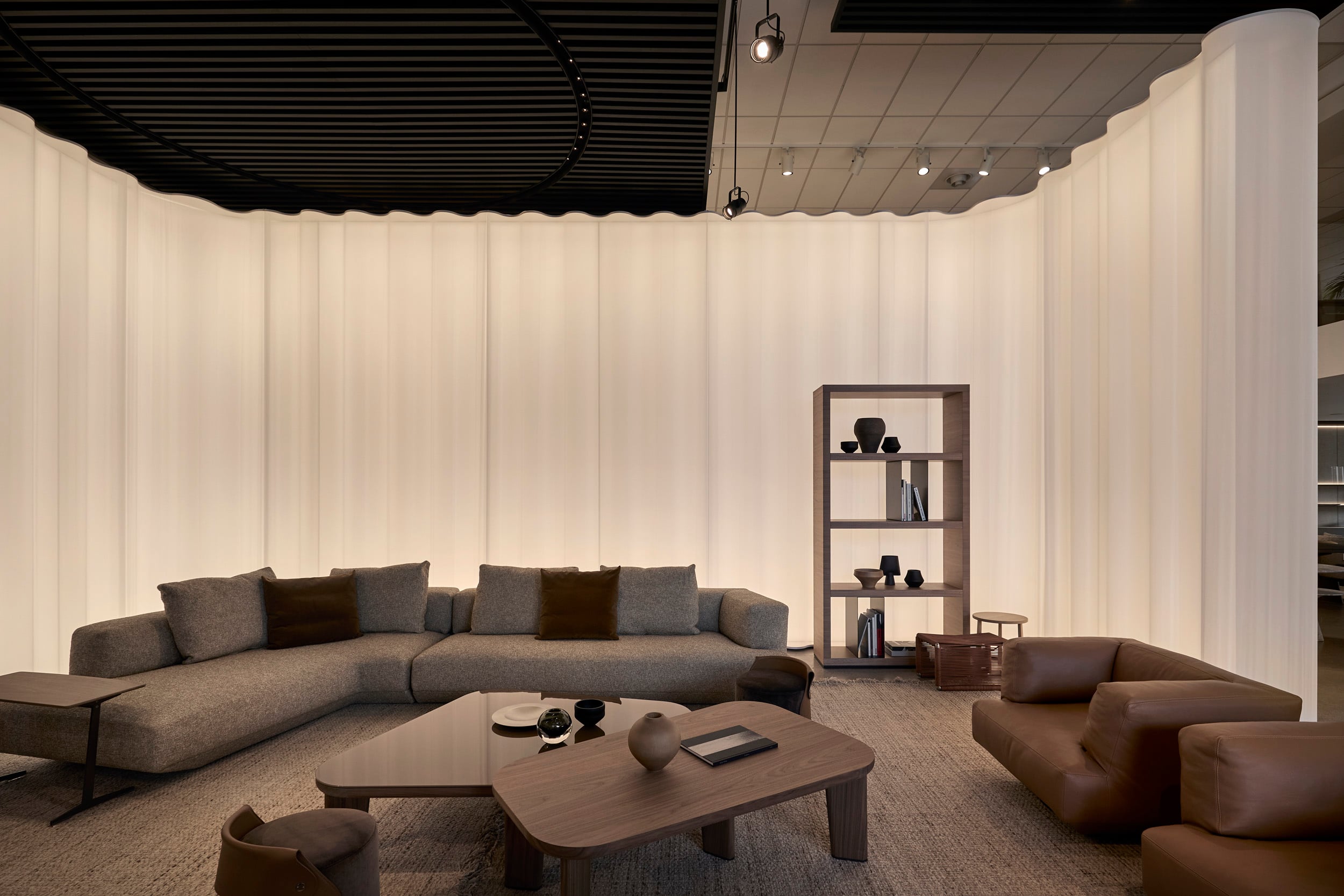
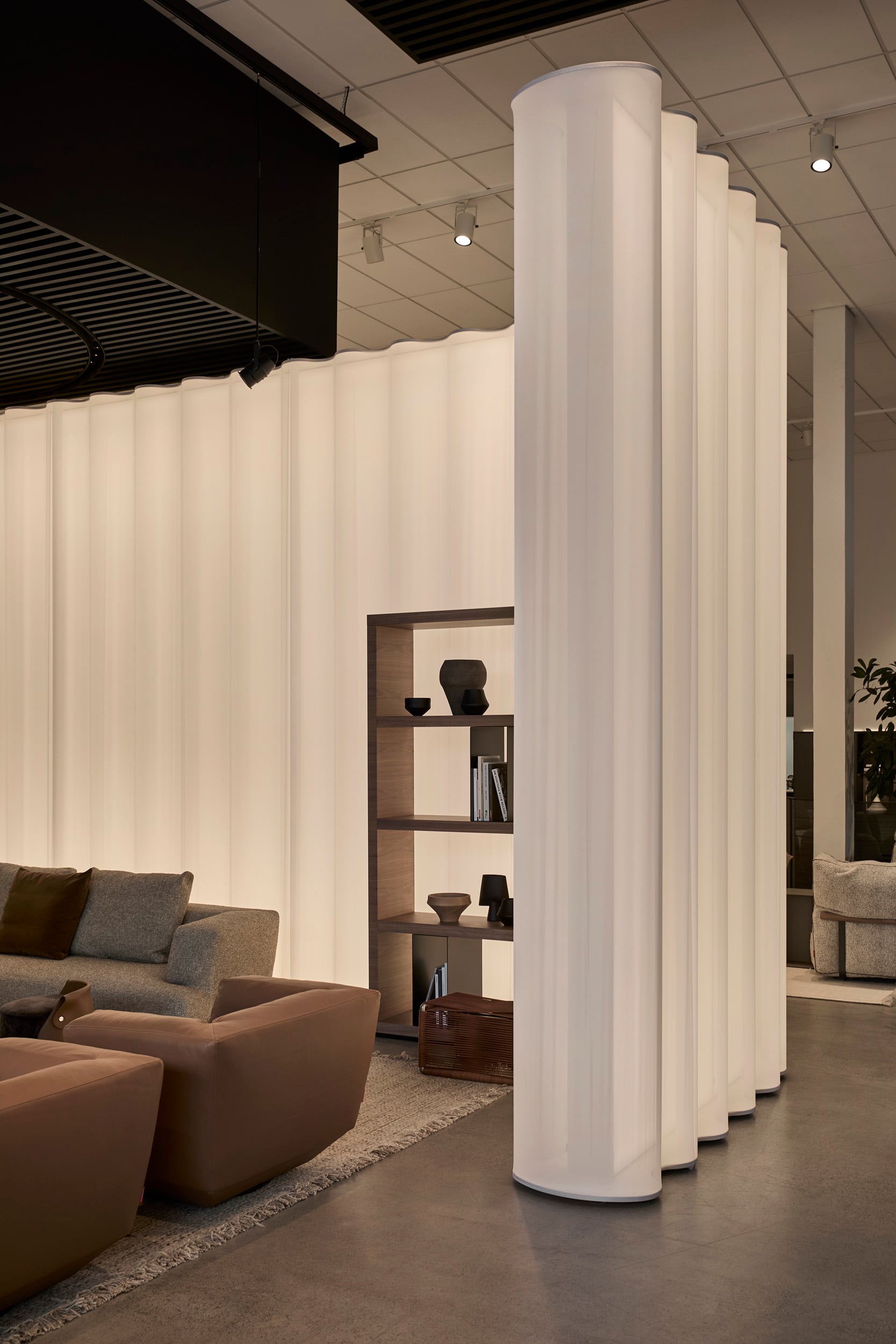
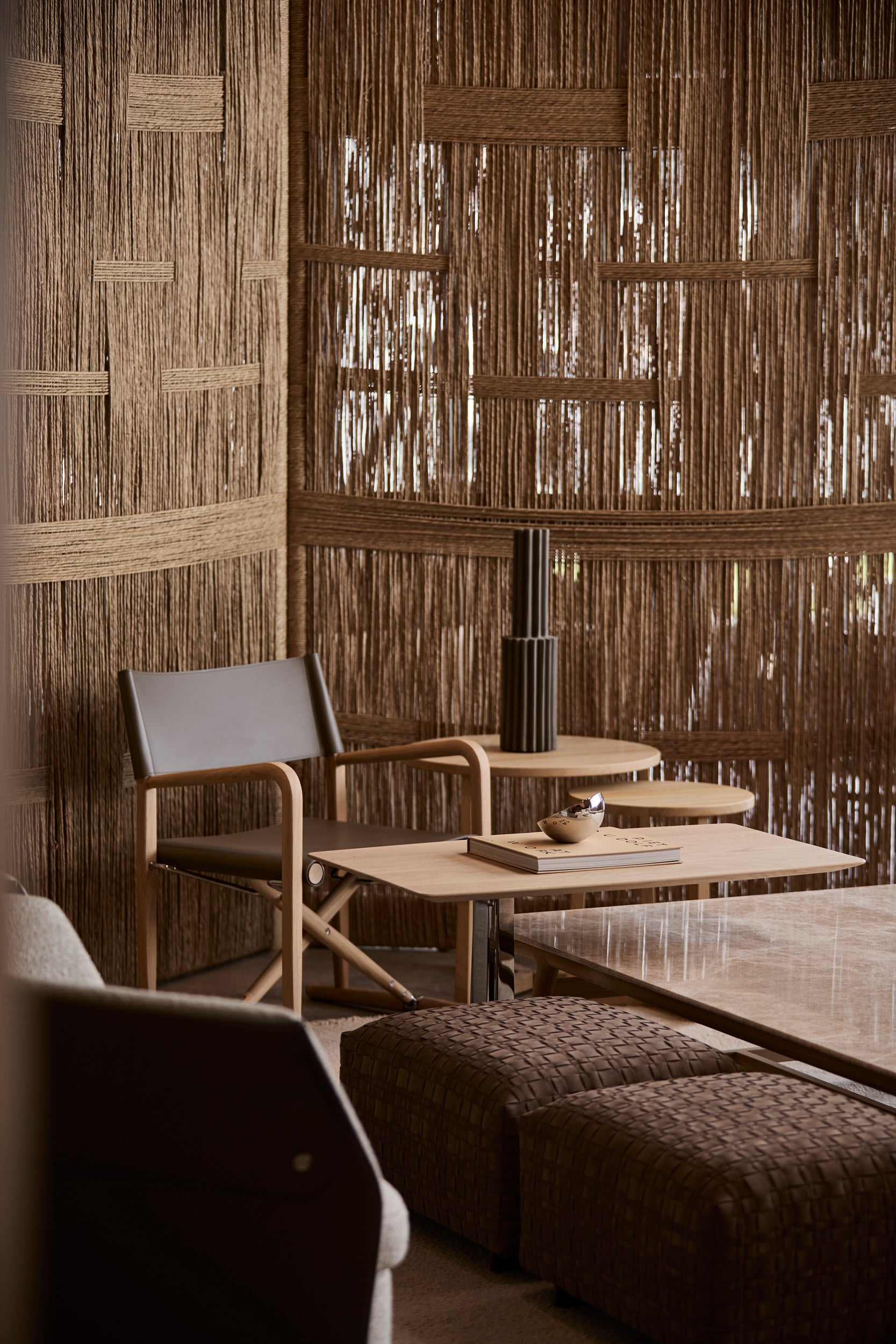
The new Flexform space, and the pieces behind it.
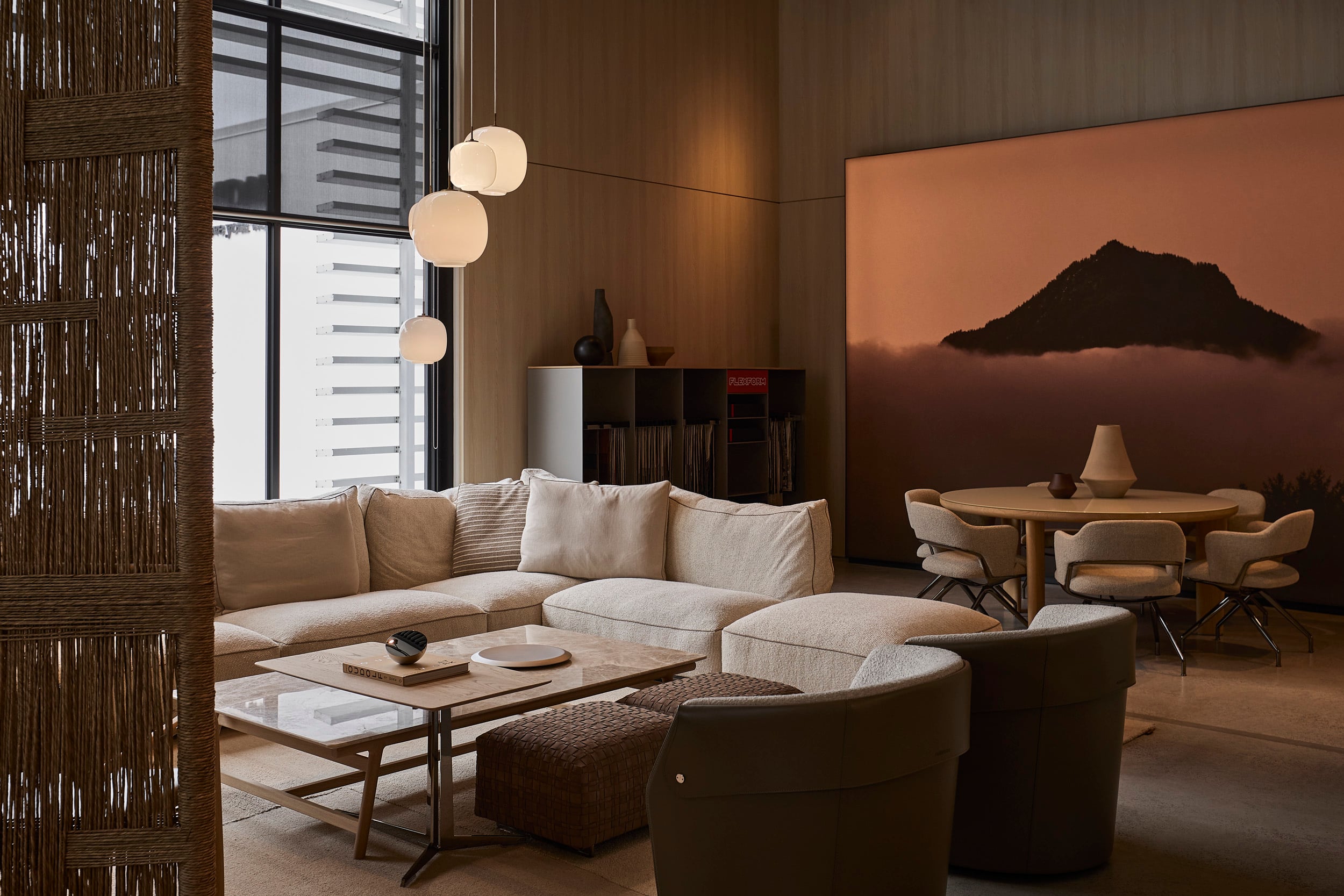
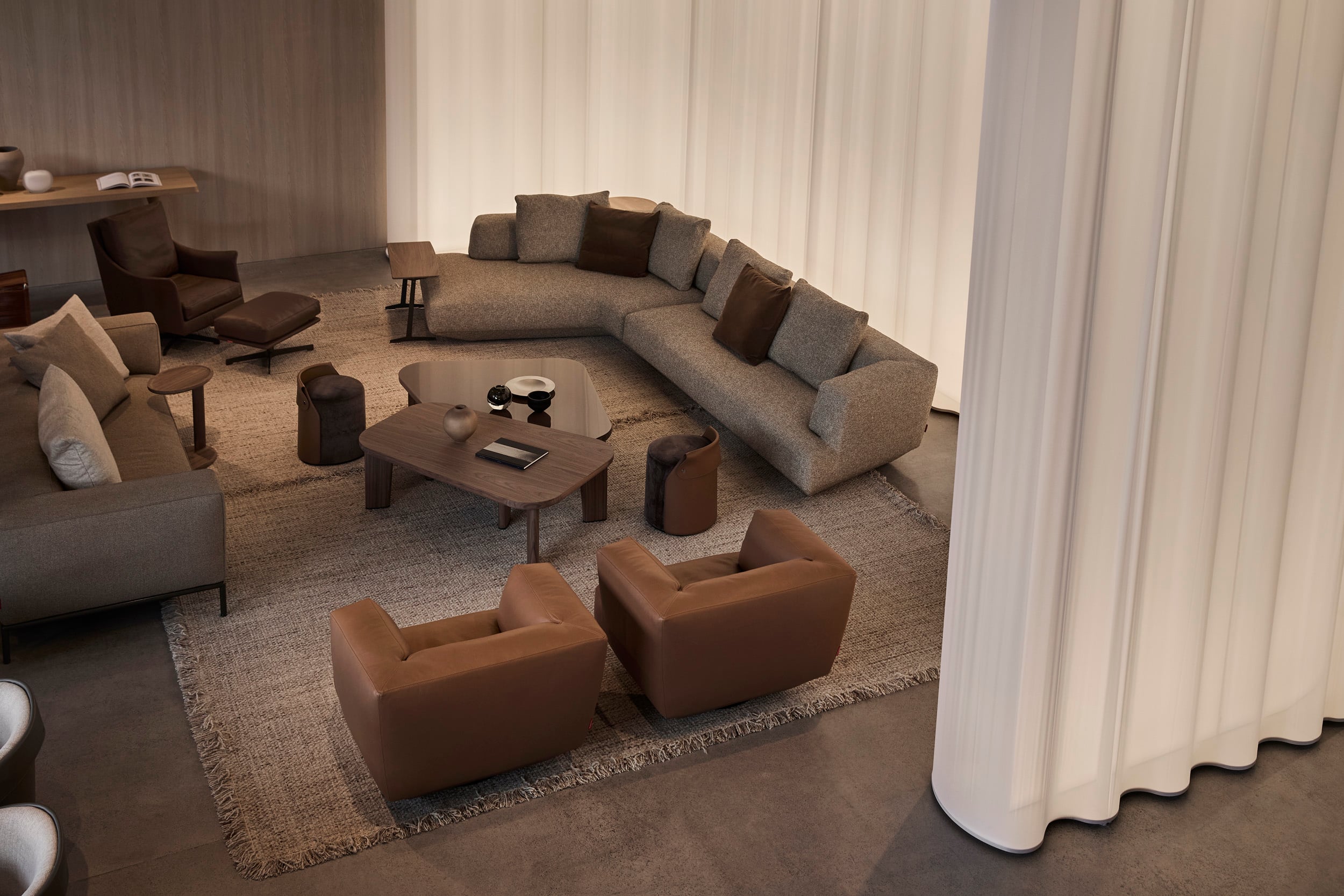
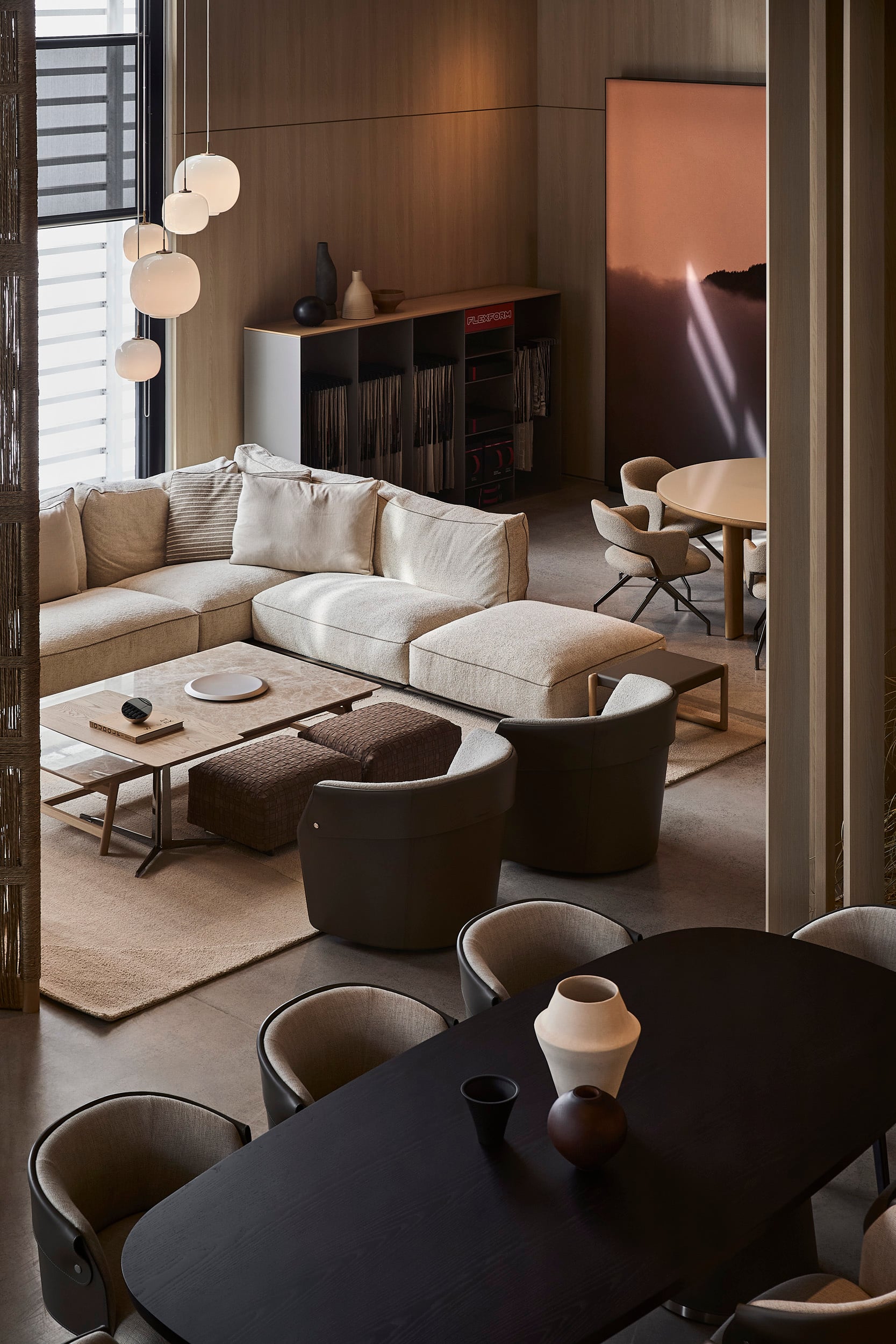
We have rebuilt the Flexform floor at Nugent Street as a sequence of rooms and filled them with the latest collection, fresh from Milan. Here is the longer story: the designers on film, the new pieces in a little more depth, and the Indoor Collection catalogue to download.
Tables · Sebastian Herkner
Tara. In conversation with Sebastian Herkner.
The designer on where the table came from, why concrete, and how a base made of two identical halves comes to look like a single carved stone.


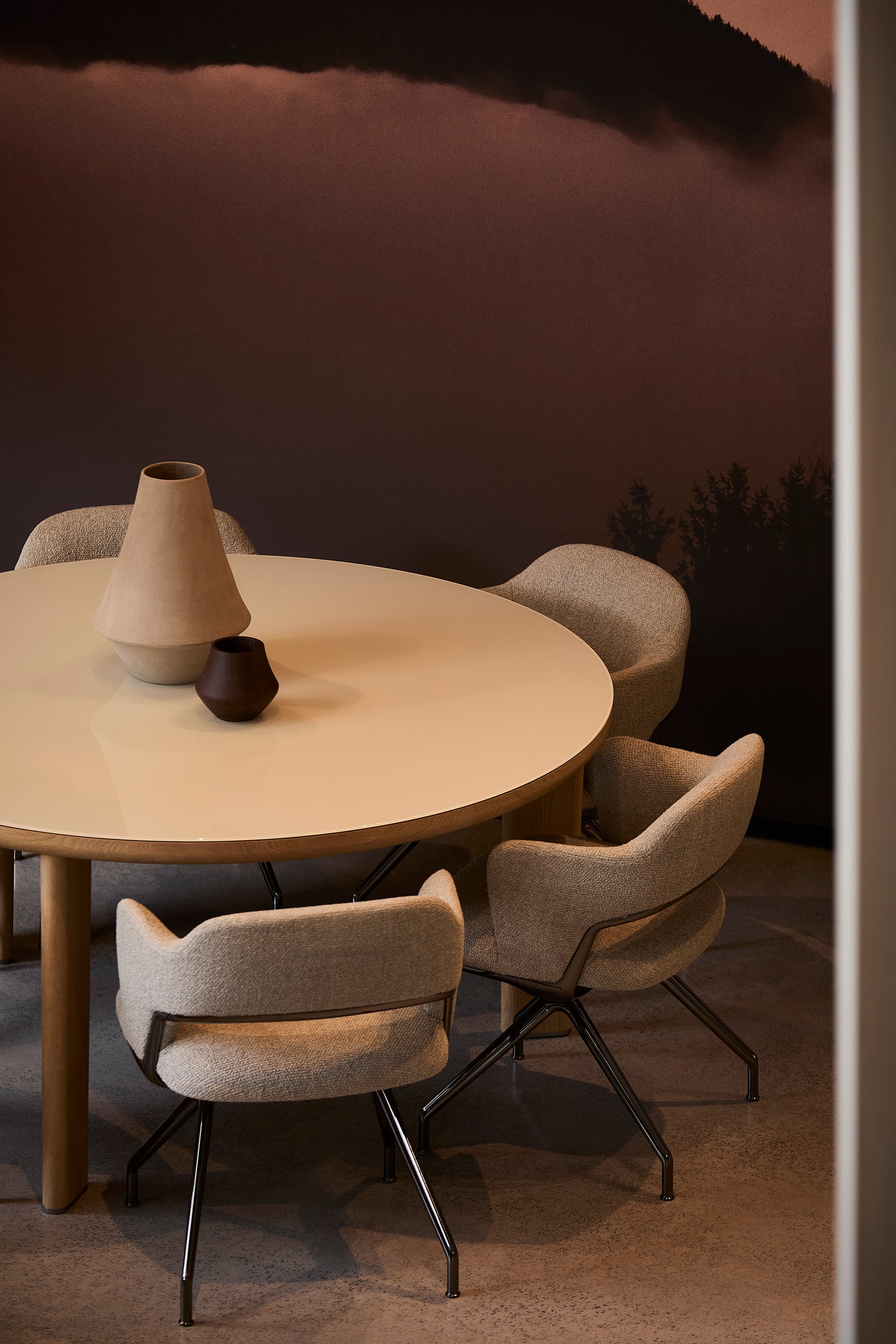
The name comes from the Hill of Tara, the plateau in Ireland that was the seat of its ancient kings, where striking rock formations still stand today. Herkner took that image of stone rising from the ground and built the table around it.
The base is concrete, two identical elements placed opposite one another, which together read as a monolith while leaving air between them. It gives the table both its weight and an unexpected lightness. Above sits a back-painted glass top, so mineral solidity meets transparency at the edge, and the whole thing feels more like a sculpture than a piece of furniture. The family runs to dining tables and coffee tables, and an outdoor version made entirely of concrete.
Sofa · Antonio Citterio
Camelot, a new chapter.
This year Flexform returned to one of Citterio's most recognisable sofas and asked photographer Robert Rieger to shoot it afresh, as the hub of an understated, warm and sophisticated house.


Camelot is a study in contrast. Below, the structure is austere: slim metal supports and a single cylindrical bar, in wood or wrapped in cowhide, carry the seat so it appears to hover just above the floor. Above, it is the opposite. Deep, goose-down backrests, seat and back finished with piping, tone on tone or in a contrasting colour, an invitation to sit back.
Flexform's idea for the new pictures was that an image can do more than show a piece of furniture; it can build a world around it. Rieger sets two Camelots face to face at the centre of a living room, in soft light and a palette of earth tones, and lets the pair carry the whole scene. Seen together they make the point of the design: the deep, generous upholstery on one side and, on the other, the slender tubular frame that holds up the backrest and arms, which is the detail that makes a Camelot recognisable from across a room.
Elements of different widths and depths combine into anything from a two-seater to a room-sized island, and almost everything can be chosen: the fabric or leather, the metal finish, the bar in one of several timbers or in cowhide. Rieger's photographs place it in soft light among natural materials, which is much how it sits in our new space, on the floor now in a fabric and cowhide pairing we have not shown before.
Outdoor · Monica Armani
Margherì. In conversation with Monica Armani.
The designer on dolce far niente, the Belle Époque garden, and how a steel frame wrapped in cord came to open like the petals of a flower.


Margherì is made for time spent doing very little, in the open air, in spaces that expand between light and shade. Its reference is the Belle Époque, when the garden was a stage for slow afternoons, but its language is contemporary: defined contours, welcoming shapes and fine-tuned proportions, with everything unnecessary taken away.
The signature is the frame. Delicately curved steel, powder-coated in soft shades, is wrapped by hand in cord to form the petals that hold the armrests and backrests, with generously padded cushions in Flexform's outdoor fabrics. The collection runs to sectional and stand-alone sofas, daybeds and a dining chair.
2001 – 2026 · Antonio Citterio
Groundpiece at 25.
The sofa that changed how we sit, in pictures: from Citterio's first sketch to the campaigns that made it famous, and the version on our floor today.
In December 2000 Antonio Citterio sketched a sofa with no arms. In their place he drew a low console wrapped in cowhide, with shelves beneath it: a side table, a bookshelf, somewhere for the newspaper, a glass, your feet. The seat was lower and deeper than anything Flexform had made, and the cushions were loose, not fixed. He named it after Donald Judd's floor sculptures and, by his own account, did not expect it to sell.
Gabriele Basilico photographed the first campaign in 2001 and it became the sofa the company is known for. Groundpiece was the first to be designed around what people actually do on one: read, work, eat, doze, put their feet up. Almost every low, loose sofa that followed, from any brand, owes it something. Twenty-five years on, the latest Groundpiece is on the floor at Nugent Street in a leather and fabric pairing we have never shown before.
Antonio Citterio, in his own words. Film by Flexform
Download
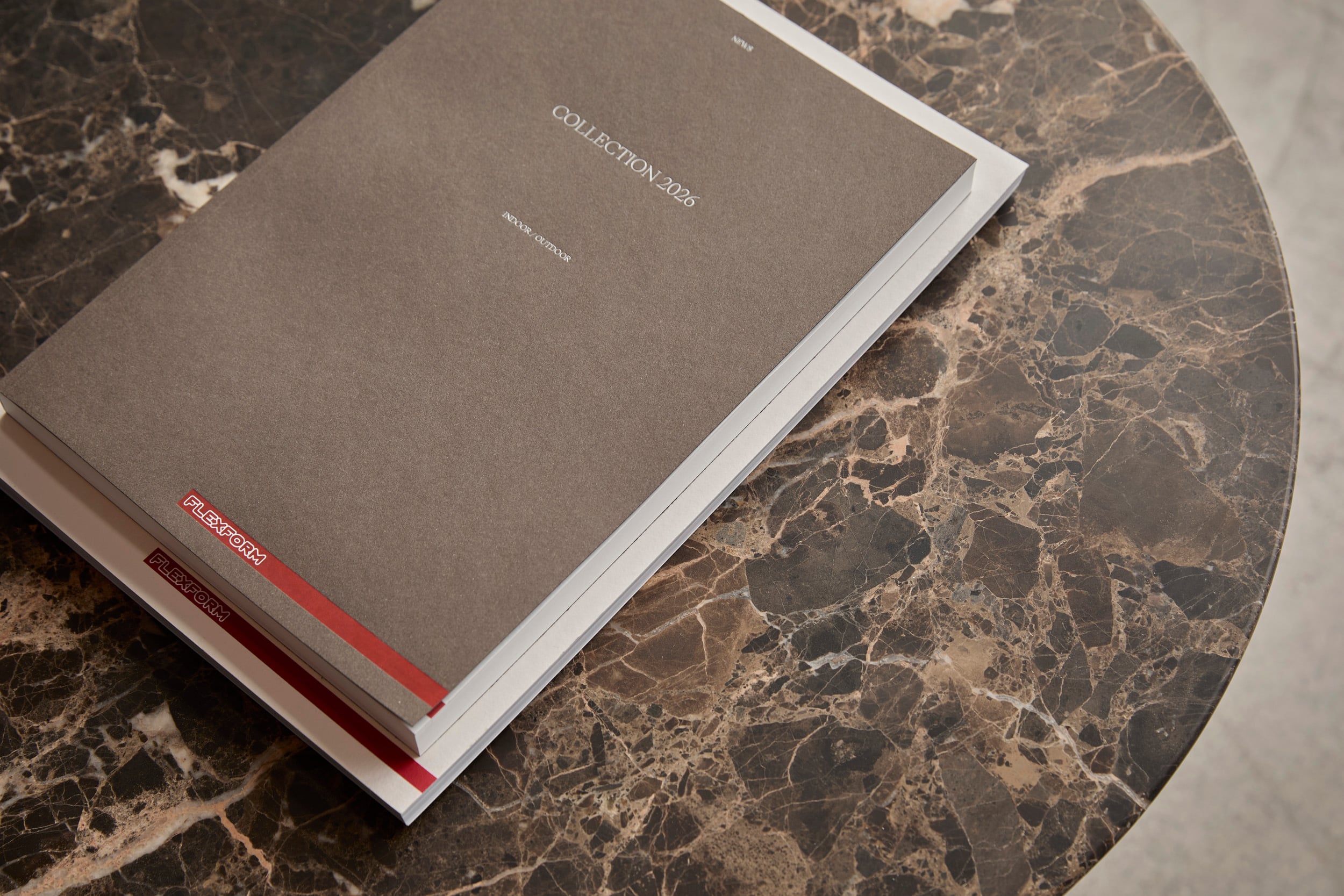
The Indoor Collection 2026.
Flexform's new catalogue for 2026: the pieces launched in Milan this year, Quincy, Tara, Avalon, Marquis, Louise, Camelot's new chapter and more, alongside the enduring designs, photographed as a series of complete interiors rather than a list of products. Download it to browse, then come and see the collection on the floor.
Download the catalogue Browse Flexform onlineStudio Italia · 25 Nugent Street, Grafton, Auckland
See it in the new space.
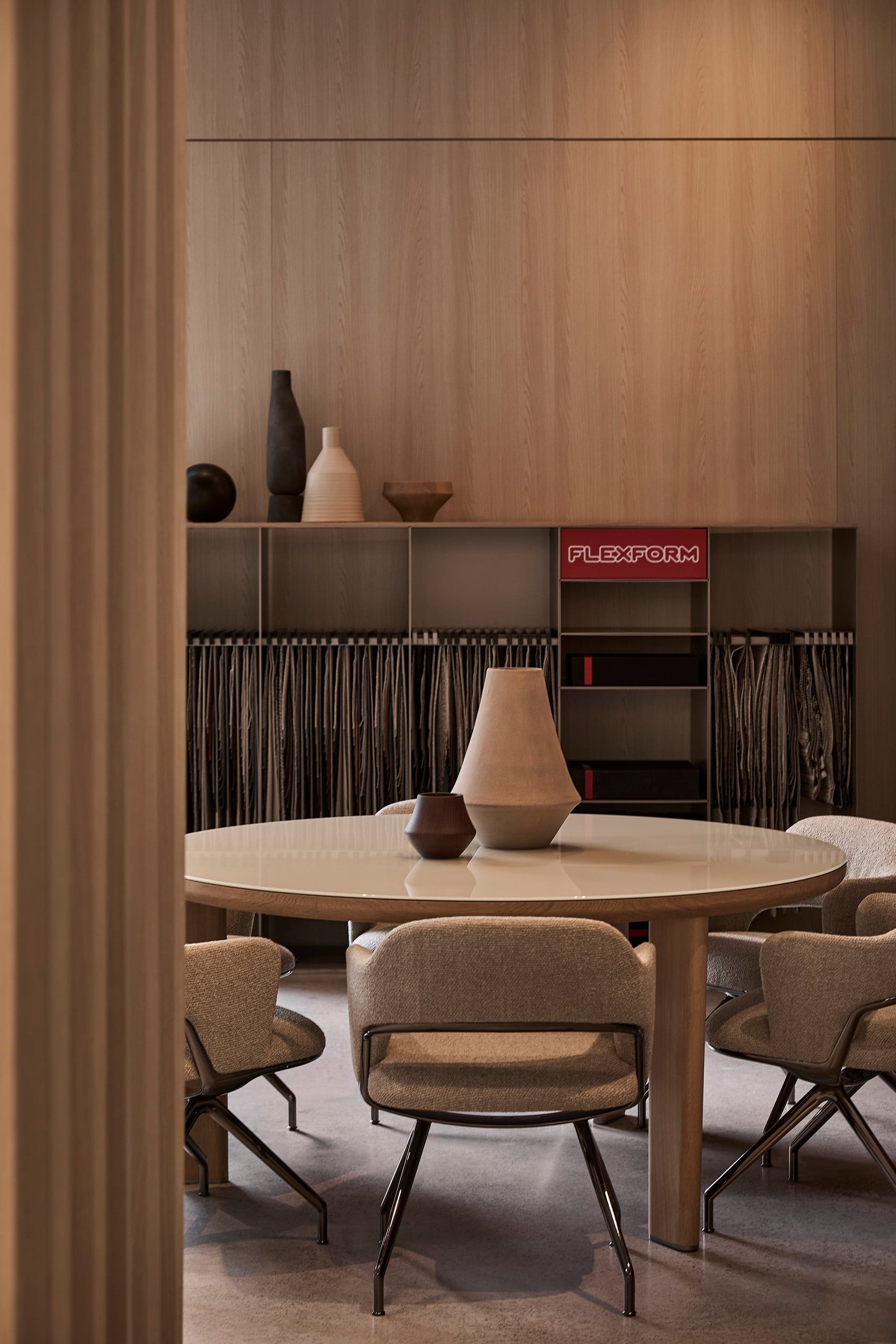
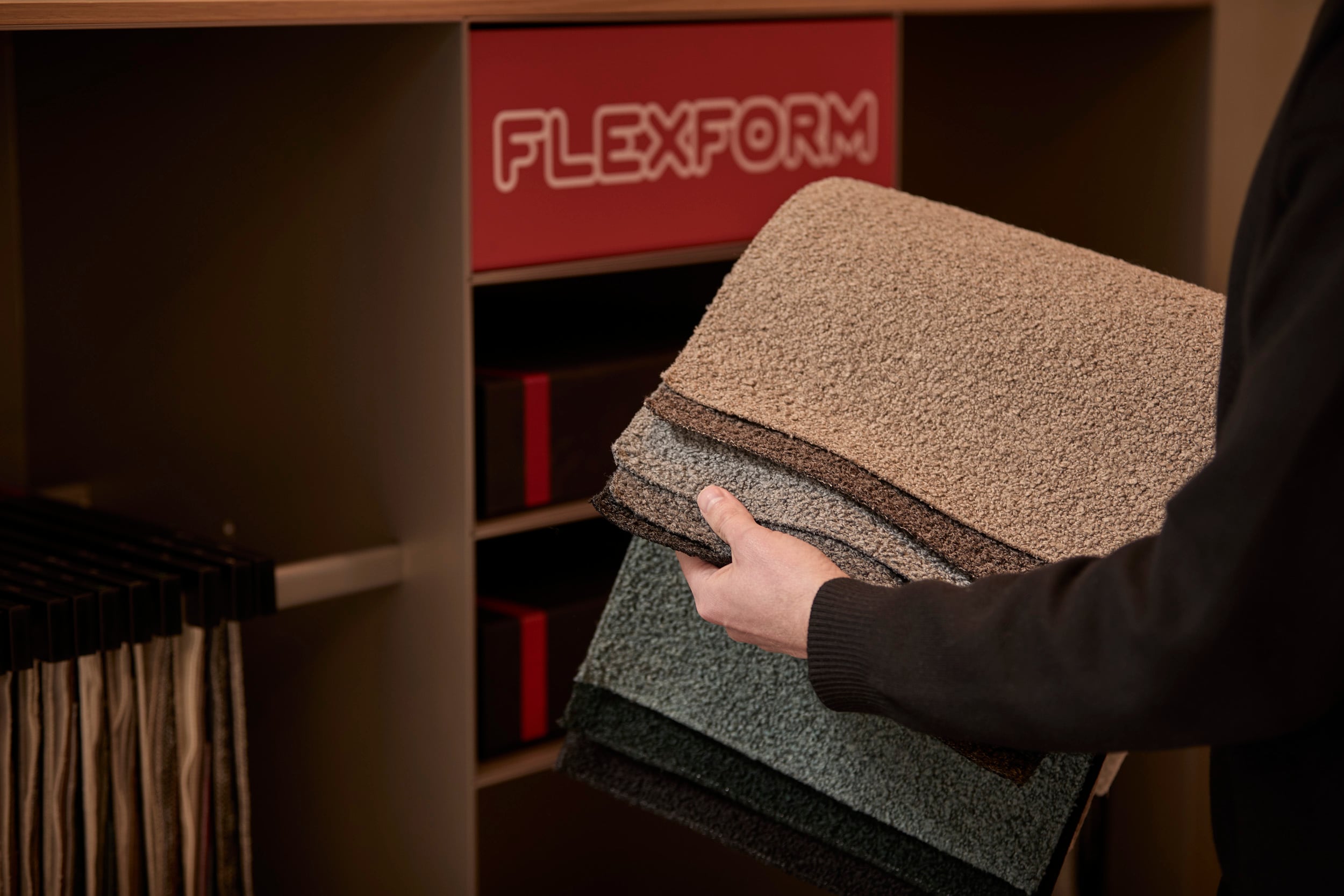
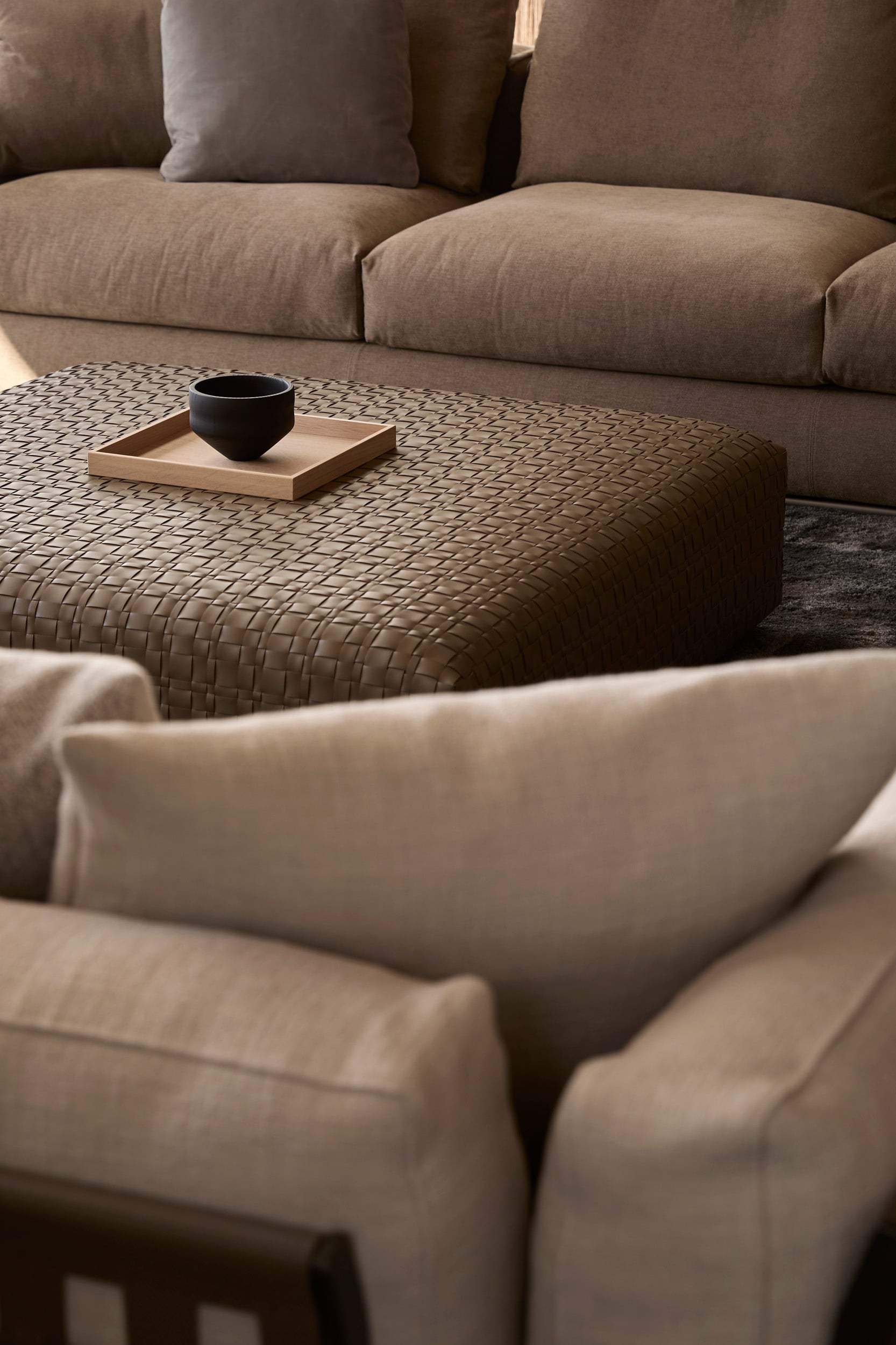
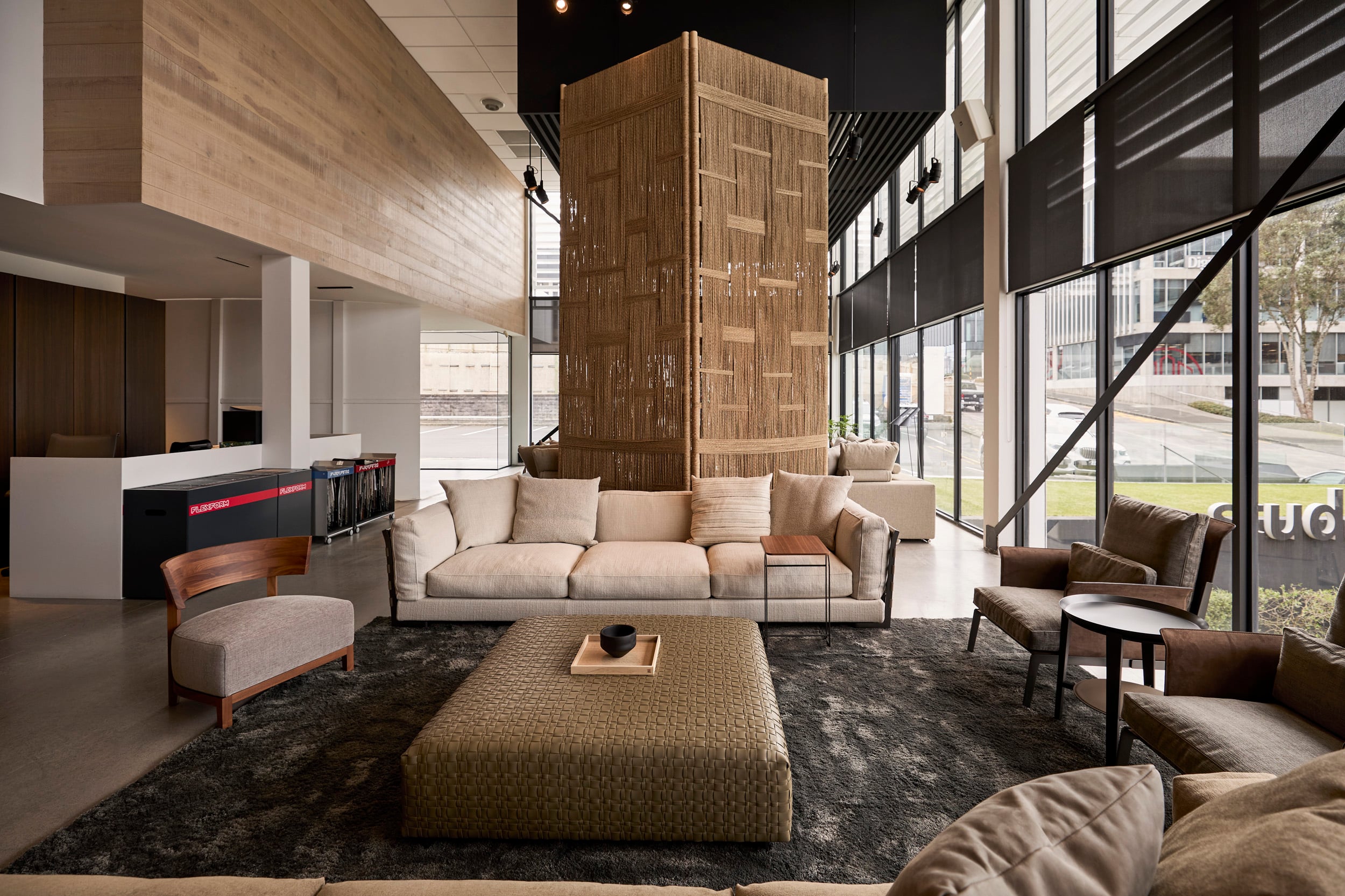
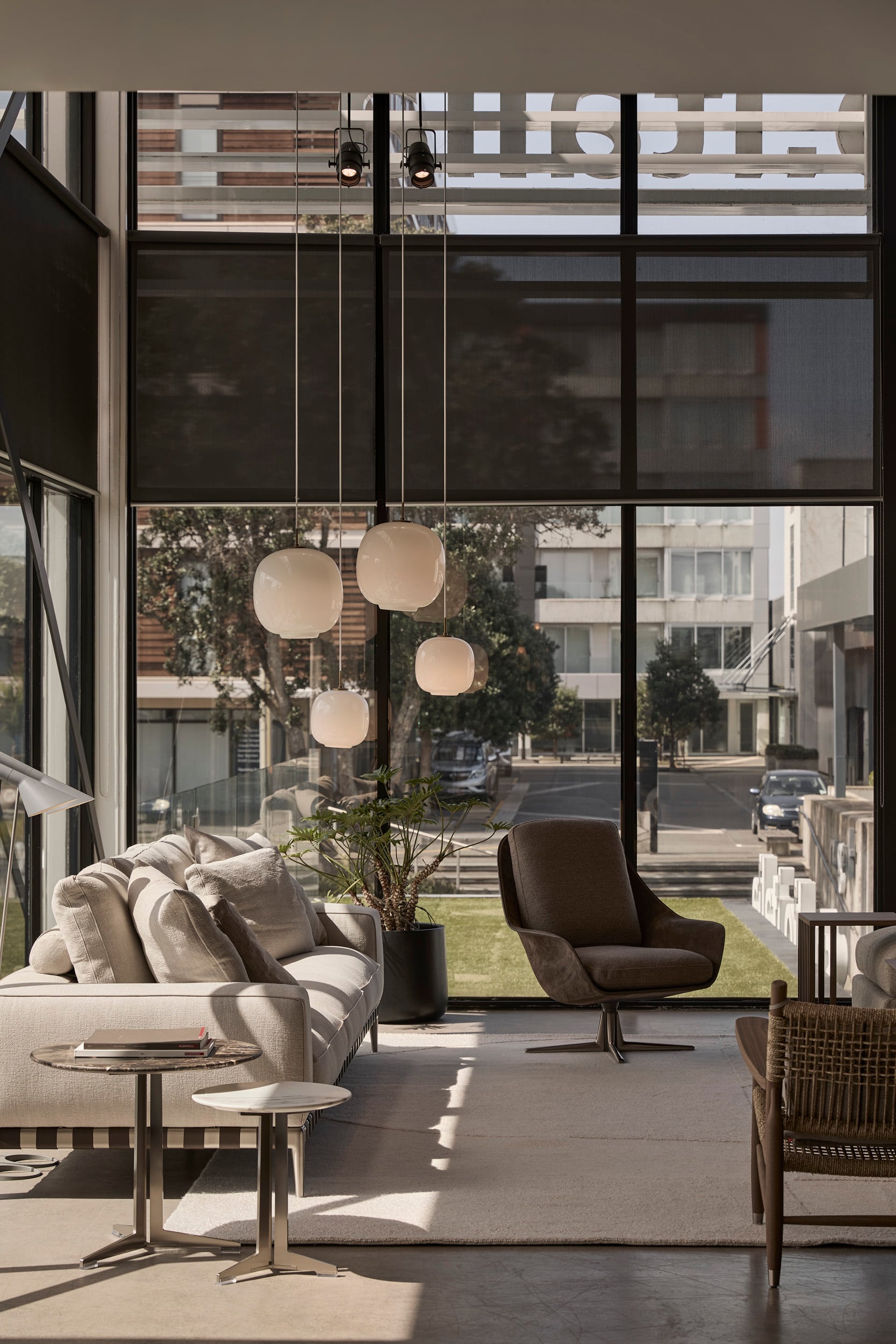
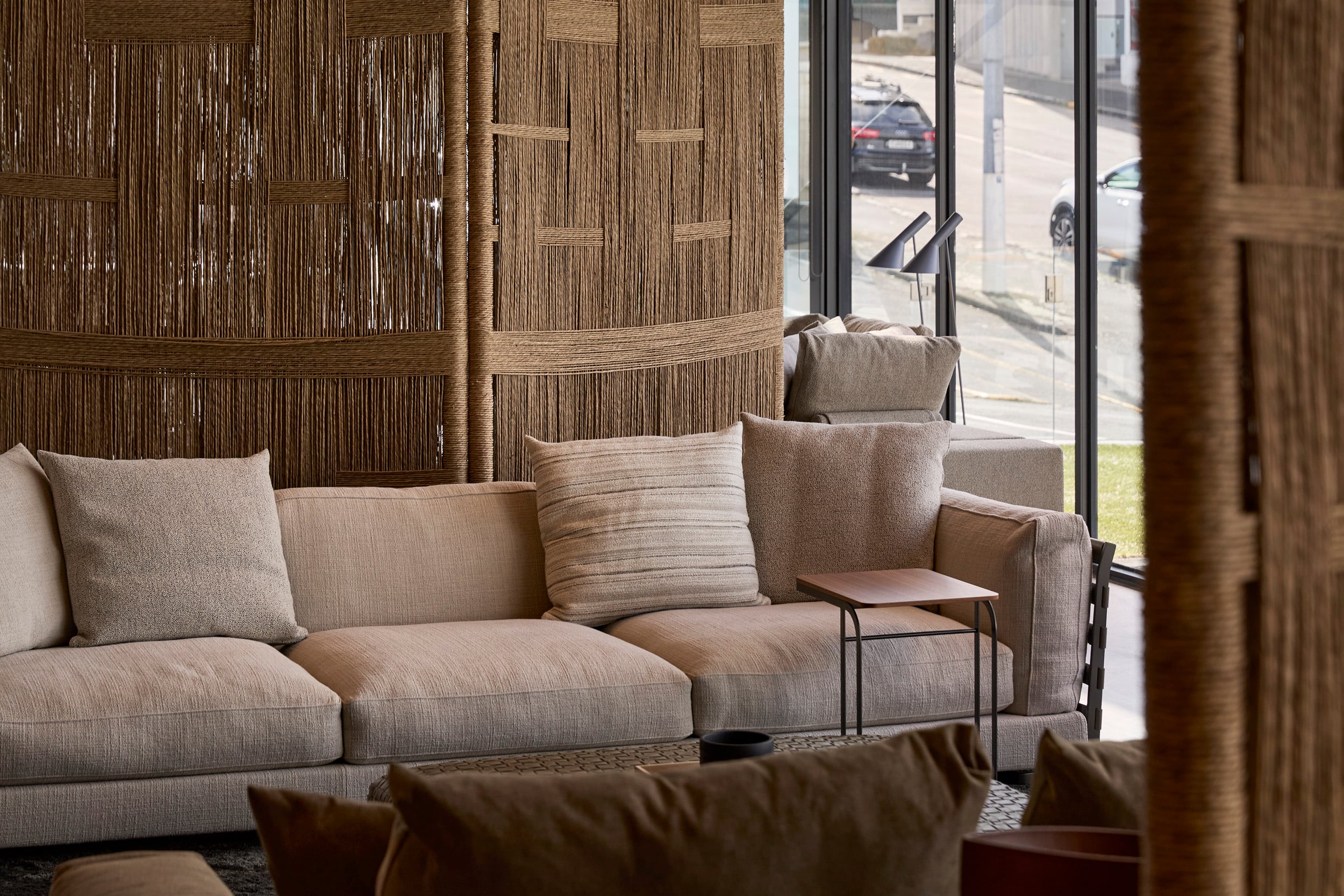
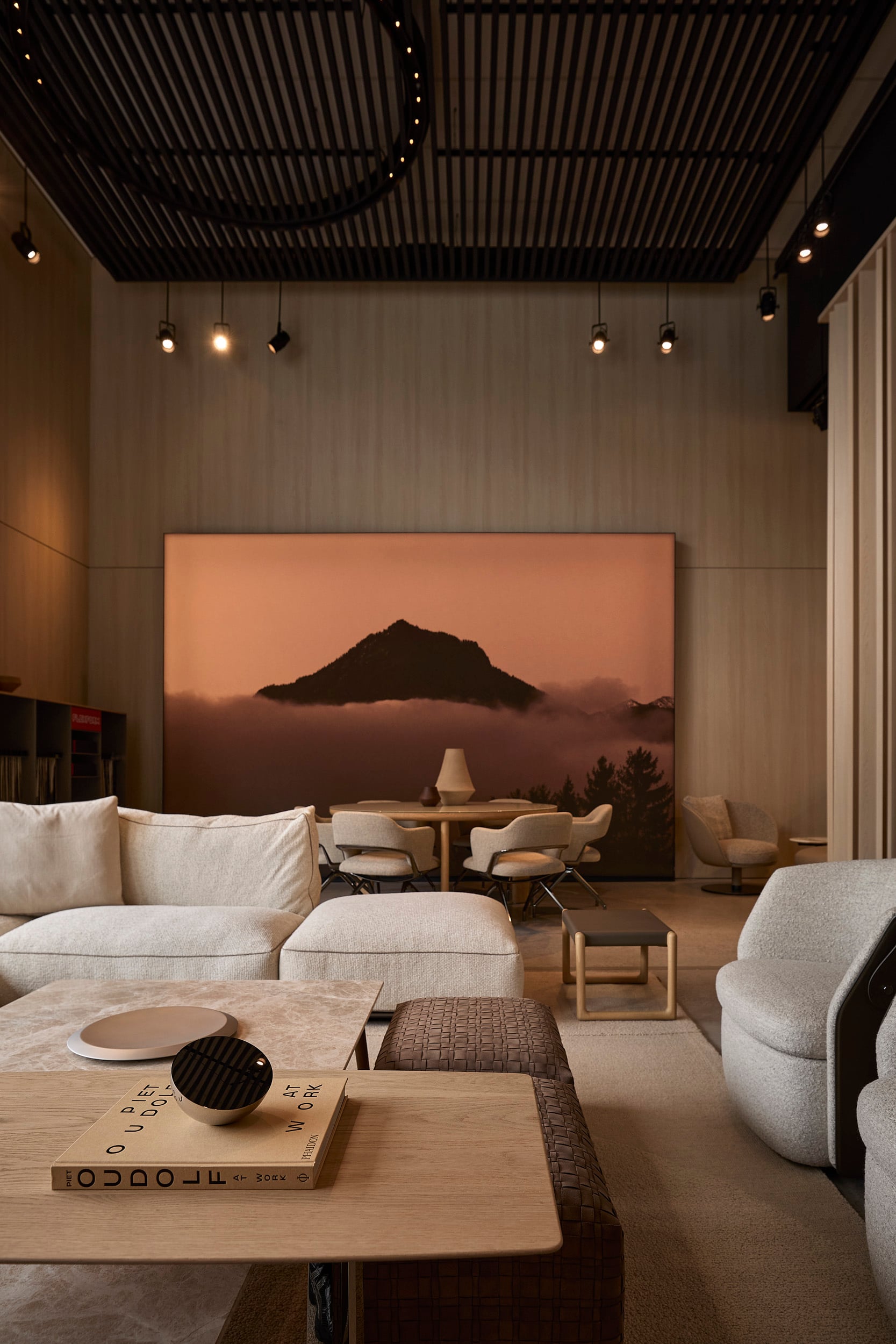
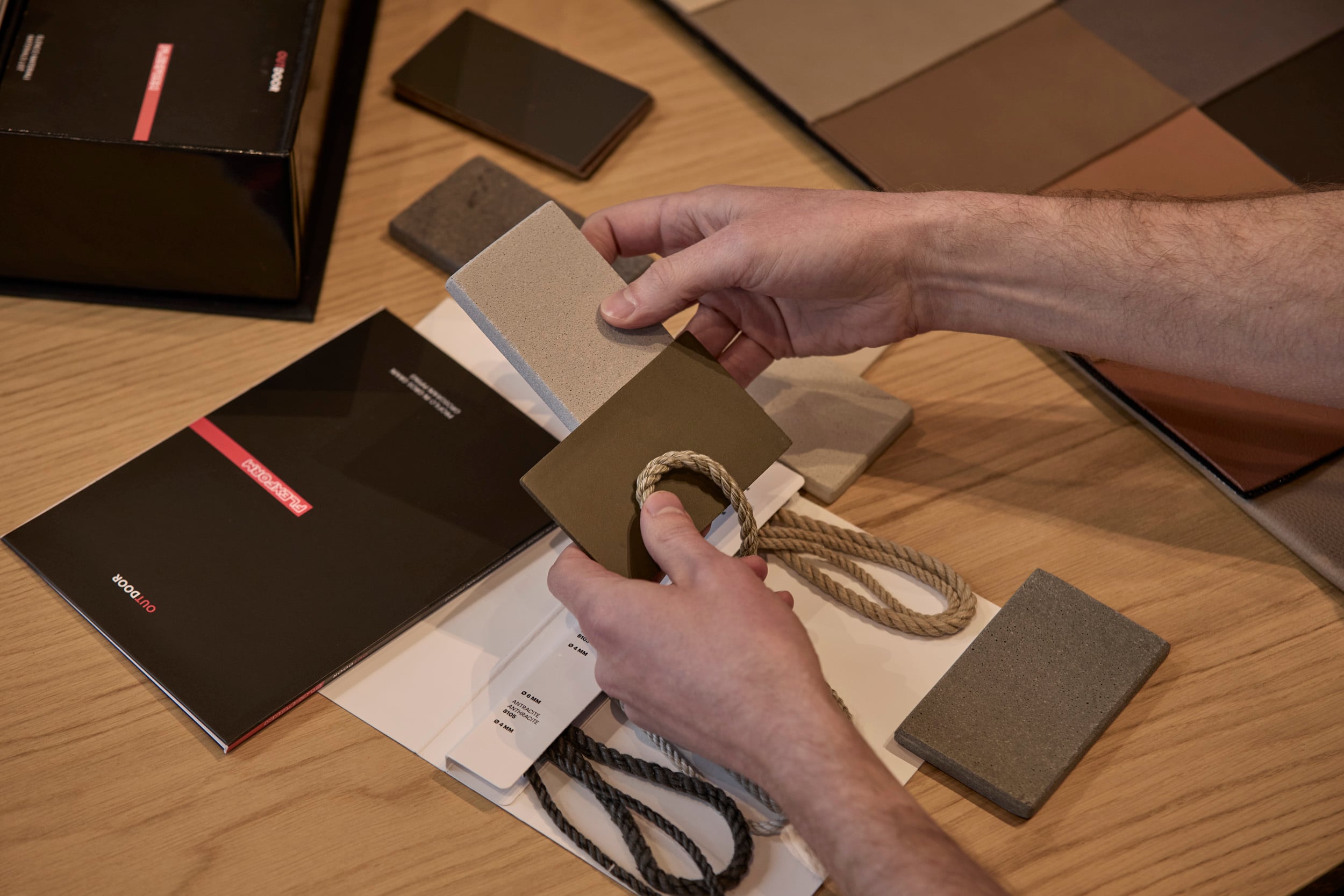
The new Flexform floor is open now. Columns of hand-woven rope and walls of backlit fabric break it into a sequence of rooms, each furnished like one you could live in, most of it in fabrics and leathers we have never had on the floor before. At the back is the material library: Flexform's fabrics, leathers, timbers, cords and finishes on one table, with the sofas a few steps away to try them against.
Designers, bring your clients. Clients, bring your questions.
Book a selection session Plan your visit25 Nugent Street, Grafton, Auckland
+64 9 523 2105
info@studioitalia.co.nz
@studioitalia